
By Alex R. Morgan · Published 2026-04-16 · Updated 2026-07-29 · 9 min read
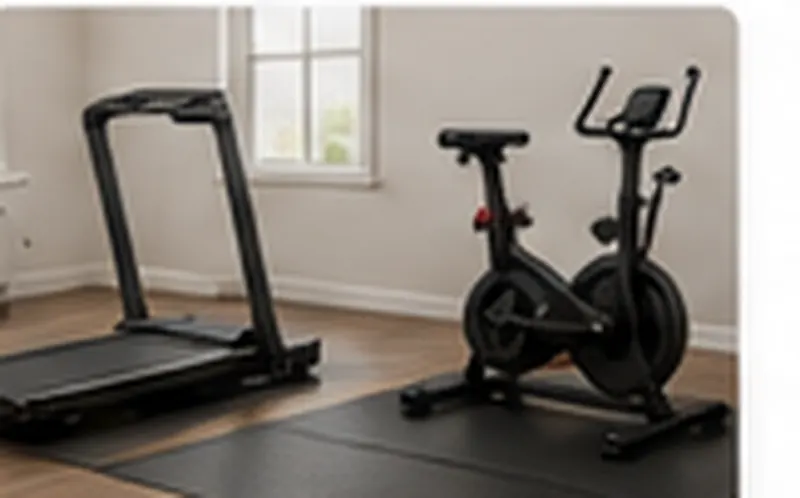
Both are substantial machines. The best choice often comes down to movement preference, ceiling clearance, service access and how much noise the room can tolerate.
Bottom line
Choose a treadmill for familiar walking or running mechanics and precise pace control. Choose an elliptical when a gliding motion and combined arm-and-leg movement better match your preferences.
At-a-glance comparison
| Factor | Option A | Option B |
|---|---|---|
| Movement | Walking or running belt | Guided elliptical stride |
| Impact | Varies with walking, running and deck cushioning | Generally a gliding movement |
| Footprint | Long and often foldable | Long, sometimes taller and rarely compact |
| Noise | Motor, belt and foot strike | Flywheel and linkage noise |
| Maintenance | Belt alignment and lubrication may apply | Joints, rails and linkages need inspection |
How to decide
Start with the limits that cannot easily be changed: room dimensions, ceiling height, floor construction, storage location and delivery access. Then compare the movements you actually expect to perform, the adjustment steps you are willing to manage and the amount of routine care the equipment requires.
Product names are not standardized internationally. Two machines in the same category can differ greatly in dimensions, resistance range, adjustment, warranty and intended use. Compare the manufacturer’s specifications for the exact model available in your country.
Advantages and drawbacks
Option A: strengths
- Familiar movement
- Useful for walking and running
- Pace and incline are easy to quantify
Limitations
- Can be heavy and noisy
- Running requires ceiling and stride clearance
- Belt and motor add maintenance
Option B: strengths
- Smooth, guided movement
- Upper-body handles on many models
- No moving belt underfoot
Limitations
- Stride geometry may not suit everyone
- Tall users may need extra ceiling clearance
- Large frame can be difficult to move
Space, noise and flooring
Measure the operating footprint rather than only the stored dimensions. Include moving parts, your own stance or stride, safe access around the machine and the path needed to bring it into the room. Dense equipment mats can protect flooring and reduce some vibration, but they cannot eliminate structural noise transmitted through walls and floors.
For heavy equipment, upper floors or uncertain structures, seek qualified advice before installation. Do not block exits, heating equipment, electrical panels or required building access.
Cost and long-term ownership
The purchase price is only one part of cost. Consider delivery, assembly, floor protection, replacement wear parts, batteries or electricity, lubrication where required and the likelihood that the equipment will remain useful as your routine changes. A simpler item used consistently can offer better value than a feature-heavy machine that is awkward to set up.
Safety and fit checks before purchase
- Confirm user-height and user-weight limits for the exact model.
- Read assembly, clearance, flooring and storage instructions.
- Inspect locks, selectors, pins, cables, bands and fasteners before use.
- Stop using equipment that is damaged, unstable or behaving unusually.
- Seek qualified medical guidance when pain, injury, balance problems or a health condition affects exercise decisions.
Frequently asked questions
Which needs more ceiling height?
Ellipticals can raise the user significantly, while treadmill incline also adds height. Add your height, the machine’s maximum step-up height and the recommended overhead clearance.
Can either machine be placed upstairs?
Check the building structure, machine weight, vibration, delivery route and floor protection. Seek qualified advice when load or vibration is uncertain.
Do foldable treadmills save much space?
They reduce the storage footprint, but still need full operating clearance and enough room to lower the deck safely.