
By Alex R. Morgan · Published 2026-07-25 · Updated 2026-07-29 · 8 min read
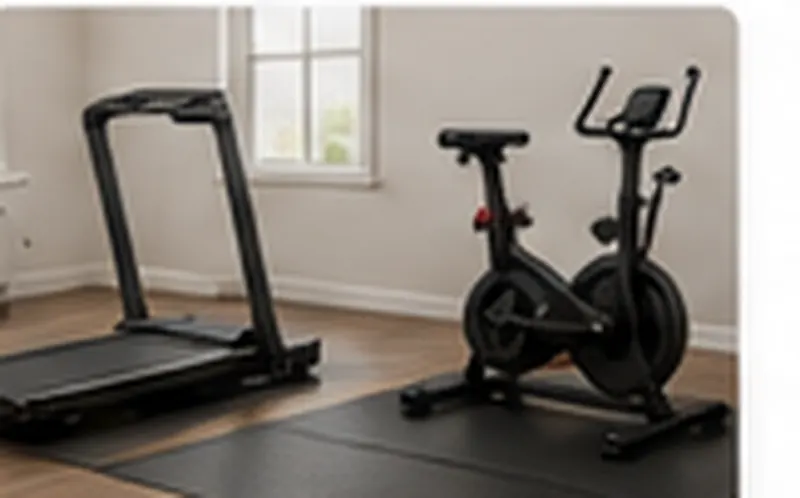
Impact describes how force is transmitted through contact with the floor or machine. It does not measure overall workout difficulty.
Bottom line
Choose equipment by movement comfort, experience, noise limits and professional guidance—not by assuming that “low impact” means easy or that “high impact” means better.
At-a-glance comparison
| Factor | Option A | Option B |
|---|---|---|
| Lower-impact examples | Exercise bikes, ellipticals, rowing machines | Movement stays supported or gliding |
| Higher-impact examples | Running and jumping activities | Repeated landing forces |
| Noise | Often lower but machine vibration remains | Foot strike can transmit through floors |
| Space | Depends on machine size | Jumping needs open clearance |
| Intensity | Can be low or high in either category | Impact and effort are different variables |
How to decide
Start with the limits that cannot easily be changed: room dimensions, ceiling height, floor construction, storage location and delivery access. Then compare the movements you actually expect to perform, the adjustment steps you are willing to manage and the amount of routine care the equipment requires.
Product names are not standardized internationally. Two machines in the same category can differ greatly in dimensions, resistance range, adjustment, warranty and intended use. Compare the manufacturer’s specifications for the exact model available in your country.
Advantages and drawbacks
Option A: strengths
- Many supported movement options
- Can suit shared spaces better
- Intensity can still be adjusted
Limitations
- Large machines may be costly
- Fit and repetitive motion still matter
- Low impact is not automatically appropriate
Option B: strengths
- Requires little equipment in some cases
- Familiar running and jumping options
- Easy to change pace
Limitations
- More floor vibration
- Needs clearance and suitable surfaces
- May not suit every person
Space, noise and flooring
Measure the operating footprint rather than only the stored dimensions. Include moving parts, your own stance or stride, safe access around the machine and the path needed to bring it into the room. Dense equipment mats can protect flooring and reduce some vibration, but they cannot eliminate structural noise transmitted through walls and floors.
For heavy equipment, upper floors or uncertain structures, seek qualified advice before installation. Do not block exits, heating equipment, electrical panels or required building access.
Cost and long-term ownership
The purchase price is only one part of cost. Consider delivery, assembly, floor protection, replacement wear parts, batteries or electricity, lubrication where required and the likelihood that the equipment will remain useful as your routine changes. A simpler item used consistently can offer better value than a feature-heavy machine that is awkward to set up.
Safety and fit checks before purchase
- Confirm user-height and user-weight limits for the exact model.
- Read assembly, clearance, flooring and storage instructions.
- Inspect locks, selectors, pins, cables, bands and fasteners before use.
- Stop using equipment that is damaged, unstable or behaving unusually.
- Seek qualified medical guidance when pain, injury, balance problems or a health condition affects exercise decisions.
Frequently asked questions
Is low-impact exercise always gentle?
No. A hard cycling or rowing session can be very demanding even though the movement is lower impact.
Which machine is best for joint pain?
That is a personal health question. Seek advice from a qualified health professional who can consider your condition and movement tolerance.
How can I reduce vibration?
Use suitable flooring, place equipment level, tighten hardware and avoid dropping gear. Building construction still determines how much sound travels.